



We deliver expert information, clearly structured and practical, directly to your inbox.
Decision trees and random forests make complex relationships visible and support informed data-based decisions. They help identify influencing factors, evaluate options, and better assess future developments.
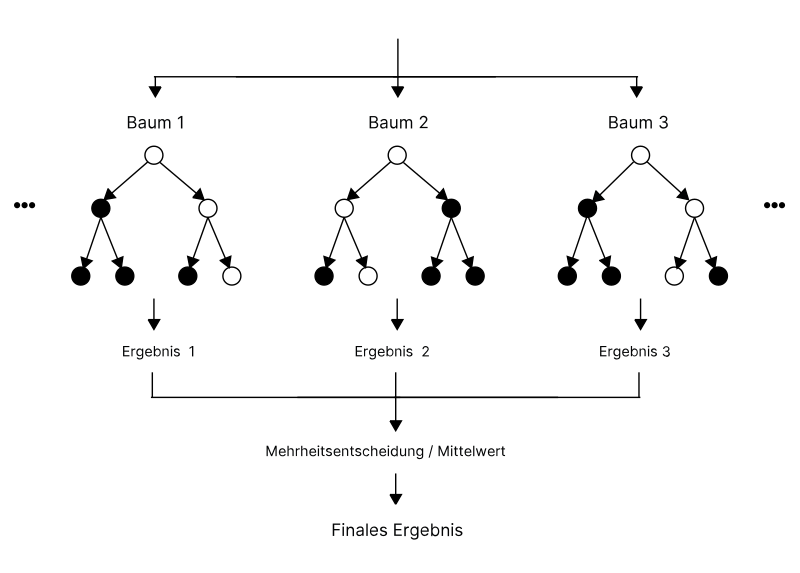
A decision tree maps decisions as a branched if-then structure, while a random forest combines many such trees to make more robust predictions. Both methods help structure complex decision processes based on data and reduce uncertainty.
Examples in Tourism:
Analyze which factors (price, season, reviews, weather) influence the choice of a travel destination.
Predict whether guests are more likely to book package tours or individual offers.
💡 Click on the boxes to expand or collapse branches
Get in touch now.



We deliver expert information, clearly structured and practical, directly to your inbox.